
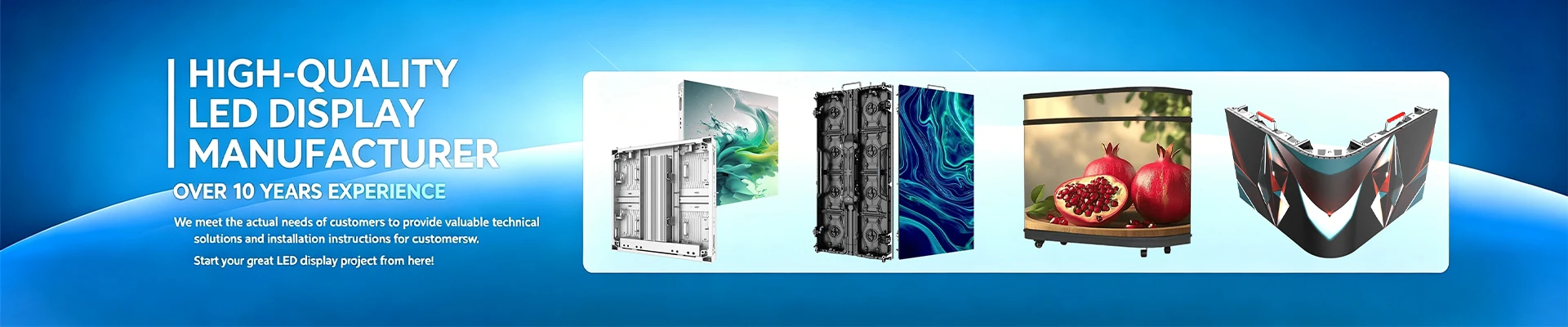


Common Cathode Outdoor LED Display
Module size: 480x320mm
Cabinet size: 960x960mm
Cabinet material: aluminum
Maintenance: front and rear service
Application: outdoor
Protection: IP65
Certification: CE, FCC, RoHS
Cathode mode: Common cathode
Average power: 265W/m²
Lifespan: >100,000 hours
Send Inquiry
Product Details ofCommon Cathode Outdoor LED Display
ASRAM Display Technology Limited is one of the leading manufacturers and suppliers of aluminum led display energy saving 960*960mm in China. We provide high quality customized products with low price for customers around the world. Welcome to wholesale cheap products in stock here from our factory. If you are looking for reliable LED display solutions, we are the original manufacturer, offering factory-direct prices and worldwide shipping. Please contact us via email for detailed specifications and customized quotations.

A 100m² outdoor LED screen running 12 hours a day can cost more in electricity than most people expect. A common anode screen pulls 400–450W/m². A common cathode screen pulls 265W/m². On a 100m² screen, that difference is about $10,512 a year at $0.15/kWh. Same brightness. Same content. Different driver design.
That last sentence is the one most buyers miss. They compare pixel pitch, brightness, IP rating, and price. They rarely compare the driver architecture. But the driver architecture is what decides how much of your electricity turns into light - and how much turns into heat inside the cabinet.
How Outdoor LED Screens Actually Use Power
Power consumption is not one number. It changes with brightness, content, and driver design.
A screen showing white text on a black background uses far less power than a screen showing full-white video. A screen running at 70% brightness uses less than the same screen running at 100%. A screen showing a dark logo at night uses less than a screen showing a bright car commercial at noon.
The driver design sets the floor. Content sets the daily number.
Most outdoor LED screens sold today are still common anode. They send 5V to every LED - red, green, and blue. But red LEDs only need about 2.8V. Green and blue need about 3.8V. The extra voltage does not make the screen brighter. It turns into heat inside the driver IC.

Common cathode takes a different path. Each color gets only the voltage it needs:
Red: around 2.8V
Green: around 3.8V
Blue: around 3.8V
Less voltage difference means less heat. Less heat means less wasted current. Lower bill.
This is not a small difference. Independent power tests and manufacturer meter readings consistently show 35–40% lower power consumption for common cathode compared with common anode at the same brightness. Some mixed-content tests show even higher savings depending on brightness settings and content type.
| Common Anode | Common Cathode | |
|---|---|---|
| Voltage | 5V to all colors | Red ~2.8V, green/blue ~3.8V |
| Average power | 400–450W/m² | 265W/m² |
| Heat | Higher | Lower |
| Cooling | Often needs fans | Typically no extra cooling equipment needed |
| Best for | Low duty cycle | 24/7 outdoor use |
| Maintenance | More heat stress on driver IC | Lower heat stress, longer component life |
| Dust risk | Fans can pull dust into cabinet | Fanless design reduces dust intake |
What 265W/m² means in real money
100m², 12h/day, $0.15/kWh
100 × 160W = 16kW.
16kW × 12h = 192kWh/day.
192 × 365 = 70,080kWh/year.
At $0.15/kWh: $10,512/year saved.
200m², 18h/day, $0.15/kWh
200 × 155W = 31kW.
31kW × 18h = 558kWh/day.
203,670kWh/year.
$30,550/year saved.
50m², 12h/day, $0.20/kWh
50 × 160W = 8kW.
8kW × 12h = 96kWh/day.
35,040kWh/year.
$7,008/year saved.
300m², 24h/day, $0.10/kWh
300 × 160W = 48kW.
48kW × 24h = 1,152kWh/day.
420,480kWh/year.
$42,048/year saved.
80m², 14h/day, $0.25/kWh
80 × 160W = 12.8kW.
12.8kW × 14h = 179.2kWh/day.
65,408kWh/year.
$16,352/year saved.
Same brightness. Lower cabinet temperature. No extra cooling fans.

How to cut the bill without buying a new screen
Avoid full-white backgrounds.
Use dark backgrounds with selective white text.
Run at 60–70% brightness, not 100%.
Let the automatic dimming system handle static content.
Choose deep reds, dark blues and amber over pure white, yellow and cyan.
Hardware sets the floor. Content sets the daily number.
.
What to check before you buy
Average power, not just max power
Common cathode or common anode
IP rating
Module size and cabinet size
Front and rear service
Certifications: CE, FCC, RoHS
Operating temperature
MTBF and failure rate
Local electricity rate and daily running hours

Italy Case Study: 80m² P10 Common Cathode Outdoor LED Display, 2026

In early 2026, a commercial complex in northern Italy installed an 80m² P10 common cathode outdoor LED display as part of a facade upgrade.
The screen uses 10mm pixel pitch. It runs 12 hours a day. Content is a mix of static branding, promotional posters, and short video loops. Brightness is set to 65–70% during the day and auto-dims at night.
The client originally specified a common anode P10. That is what most suppliers quoted. After comparing factory power test reports, they switched to common cathode.
The reason was not environmental. It was financial.
Three-month meter data showed an average of 268W/m² under mixed content. A common anode P10 would have averaged around 425W/m² at the same brightness. That is a difference of 157W/m².
Here is the math:
80m² × 157W = 12.56kW.
12.56kW × 12h = 150.7kWh/day.
150.7 × 365 = 55,000kWh/year.
At €0.18/kWh: about €9,900 saved per year.
Same brightness. Lower cabinet temperature. No extra cooling fans. No dust pulled into the cabinet.
The client is now evaluating the same P10 common cathode design for a second phase.
This is one of the first P10 common cathode installations in Italy from this 2026 line. Long-term data is still being collected, but the first three months match the factory test reports.
That last point matters. A new model should not pretend to have five years of field data. What it can show is early meter readings, factory test reports, and a clear calculation. That is what serious buyers ask for.
Common mistakes when buying an outdoor LED screen
Mistake 1: Only comparing purchase price.
A common anode screen can be 20% cheaper upfront. Over 5 years, it can cost 40% more to run.
Mistake 2: Running at 100% brightness all day.
Most screens don't need it. 70% is often enough. You cut power without losing visibility.
Mistake 3: Ignoring maintenance access.
Front and rear service saves time and money. Rear-only service means you need space behind the screen.
Mistake 4: Not asking for a power test report.
Any supplier can say "low power." Ask for a meter reading.
Mistake 5: Using full-white content.
White pulls maximum power from every LED. Darker backgrounds with selective white text use far less.

FAQ
1. What is a common cathode LED display?
In a common cathode LED display, the RGB LEDs share a common ground, and each color gets its own voltage. Red runs around 2.8V. Green and blue run around 3.8V. A common anode display sends 5V to all colors, and the extra voltage becomes heat inside the driver IC.
2. Why does common cathode use less power?
Because each color gets only the voltage it needs. Less voltage difference means less heat inside the driver IC. Less heat means less wasted power. The result is 35–40% lower power consumption than common anode at the same brightness.
3. What is the average power consumption?
265W/m² average under mixed content. Peak is 800W/m², and that only happens during full-load dynamic HD playback in strong sunlight. Static text, logos, and low-brightness content use much less.
4. How much can I save compared to a common anode screen?
A common anode outdoor screen pulls 400–450W/m² average. This common cathode screen pulls 265W/m². For a 100m² screen running 12 hours a day at $0.15/kWh, that is about $10,512 saved per year.
5. Does it need cooling fans?
No extra cooling equipment is required. The white aluminum cabinet acts as a heat sink. Common cathode generates less heat at the driver IC. No fans, no moving parts, no dust pulled into the cabinet.
6. Does it work in desert heat?
Yes. Operating range is -20°C to +50°C. IP65 and three-proof paint protect against dust, sand, and moisture. No extra cooling fans. Common cathode runs cooler, so heat stress on the driver IC is lower.
7. Can it run 24/7 outdoors?
Yes. Lifespan is over 100,000 hours. MTBF is over 5,000 hours. Failure rate is below 0.0001. It is designed for long-term outdoor operation at 24/7.
8. What certifications does it have?
CE, FCC, and RoHS. CE for EU health, safety, and environmental requirements. FCC for US electromagnetic interference limits. RoHS restricts hazardous substances like lead, mercury, and cadmium.
9. Does common cathode work with Novastar and Linsn?
Yes. Common cathode screens are compatible with major control systems including Novastar and Linsn. If your CMS supports standard HUB75 or HUB320 interfaces, no additional hardware is needed.
10. What is front and rear service?
You can replace modules and power supplies from the front or the back. Module replacement takes about 2 minutes. Power supply replacement takes about 5 minutes. Six modules per cabinet.
|
|
P4.44 |
P5.7 |
P6.67 |
P8 |
P10 |
|
Model Number |
P4.44 |
P5.7 |
P6.67 |
P8 |
P10 |
|
Physical Pitch |
4.44mm |
5.7mm |
6.67mm |
8mm |
10mm |
|
Package Mode |
SMD1921 |
SMD2727 |
SMD2727/SMD3535 |
SMD3535 |
SMD3535 |
|
Physical Density |
50625 dots/㎡ |
30625 dots/㎡ |
22500 dots/㎡ |
15625 dots/㎡ |
10000 dots/㎡ |
|
Module Size |
480*320mm |
||||
|
Pixel Resolution |
108*72=7776dots |
84*56=4704 dots |
72*48=3456 dots |
60*40=2400dots |
48*32=1536 dots |
|
Module Thickness |
20mm |
||||
|
Weight |
2.6kg |
||||
|
Max Power |
90W |
90W |
90W |
100W |
90W |
|
Scan Mode |
1/9S |
1/7S |
1/6S |
1/4S |
1/2S |
|
Match Cabinet |
96096071mm |
||||
|
Cabinet Weight |
24.1kg |
||||
|
Pixel per cabinet |
216*216=46656dots |
168*168=28224dots |
144*144=20736dots |
120*120=14400dots |
96*96=9216dots |
|
Number of cabinet modules |
6pcs |
||||
|
Recommended Viewing |
4-100m |
5-100m |
6-100m |
8-100m |
10-100m |
|
Change frame frequency |
60Hz |
||||
|
Rate refresh |
≥3840Hz |
||||
|
Pixel Configuration |
1R1G1B |
||||
|
Brightness of white Balance |
≥6000cd/㎡ |
≥6000cd/㎡ |
≥6000cd/㎡ |
≥6000cd/㎡ |
≥6500cd/㎡ |
|
Number of power supplies in the cabinet |
2pcs |
||||
|
Power Supply |
5V/80A*2 pcs |
|
Average Power Consumption |
265W/㎡ |
|
Max. Power Consumption |
800W/㎡ |
|
Protection level |
IP65 |
|
Protective Measures |
Three Proofing Paint |
|
Module working voltage |
DC 5V |
|
Operating |
-20 ~ +50℃ |
|
Life Time |
>100000h |
|
The Rate |
<0.0001 |
|
MBTF |
>5000h |
|
Maintenance Connection Mode |
Maintenance from the Front/Back |
|
Best Viewing Angle |
H:120°;V:120° |
|
Cabinet Matching Module Model |
P4.44/P5.7/P6.67/P8/P10 |
|
Input Voltage |
220V;AC±10% |
|
Planeness |
≤0.5mm |
|
Working Voltage |
220V;AC±10% |
|
CPU |
Pentium4 or above P4 |
|
Operation system |
WIN98/2000/NT/XP/WIN7 |
|
Control Method |
Synchronization |
|
Driving IC |
PWM |
Hot Tags: aluminum led display energy saving 960*960mm, China aluminum led display energy saving 960*960mm suppliers, manufacturers, factory
Previous
No InformationSend Inquiry
